


The Best Herbs to Travel With: My Herbal Travel Kit for Planes, Airports, and Everything in Between
I am heading to Washington D.C. and my suitcase is already half full of herbs.
If you know me at all, you are not even a little surprised by that.
But here's the thing... Travel is genuinely a lot for the body. And when you are living with EDS, POTS, and MCAS, that statement takes on a whole new level of meaning. We are not just navigating the normal travel stressors of flight times, security lines, and unfamiliar hotel beds. We are also managing dysautonomia in airports, histamine reactions to new foods, nervous systems that do not handle disrupted routines gracefully, and joints that have some very strong opinions about sitting on a plane for several hours.
I am traveling from the dry desert Southwest into an entirely different climate with changes in temperature, humidity, allergens, food, sleep, and daily routine all happening at once. And rather than just hoping for the best, I pack support for my body right alongside my clothes.
These are the herbs I consider the absolute best herbs to travel with.
The Best Herbs to Travel With:

Ginger (Zingiber officinale)
If I could only bring one herb on a trip, ginger would be it. She is warming, stimulating, and wonderfully supportive to digestion, which makes her my first reach when travel, unfamiliar foods, or a completely disrupted routine leaves my stomach feeling unsettled.
I love ginger for queasiness and digestive discomfort, gas and bloating after restaurant meals, general aches and stiffness after sitting for hours on a plane, and warming me up when moving from desert heat into cooler weather. She is particularly wonderful for that climate shock moment when you step off a plane and your body goes wait, where are we?
Ginger tea bags are incredibly easy to toss into a carry-on. Add hot water and suddenly your hotel room has become a tiny herbal apothecary.

Peppermint (Mentha x piperita)
Peppermint might be the most versatile herb in my travel bag. A cup of peppermint tea after a large restaurant meal or at the end of a long day of sightseeing is one of my favorite simple rituals on the road.
She is traditionally used to support digestion and is particularly comforting for gas, bloating, and intestinal cramping. But honestly after hours of airports, crowds, traffic, noise, and sensory stimulation? Even just the aroma of peppermint can feel like a reset button for an overwhelmed nervous system. And for those of us with chronic illness who know exactly how quickly sensory overload can derail a good travel day, you know how important that is!

Lemon Balm (Melissa officinalis)
Oh lemon balm. She is one of those herbs I want nearby whenever my nervous system is being asked to do something outside its normal routine. And travel absolutely qualifies.
Flight times to remember, security lines, crowds, unfamiliar places, hotel beds that are not your bed, disrupted schedules, and that peculiar feeling of being completely exhausted while somehow still being too wound up to sleep. Sound familiar? For those of us with dysautonomia that wind up exhausted feeling is basically a travel specialty.
Lemon balm is a beautiful calming nervine traditionally used for nervousness, tension, and digestive upset associated with stress. I love her as an evening tea once I have finally made it back to the hotel. She feels like telling the nervous system, we made it, you can settle now.

Chamomile (Matricaria chamomilla)
Chamomile earns her place in my suitcase because she does several jobs beautifully all at once. She is gentle, calming, soothing to the digestive system, and one of my favorite herbs for creating a little bedtime ritual when I am sleeping somewhere unfamiliar.
Travel can completely disrupt our normal rhythms and for those of us with chronic illness, disrupted sleep is not just inconvenient. It can trigger flares, worsen pain, and make the whole trip so much harder than it needs to be. A cup of chamomile tea before bed becomes a familiar ritual in an unfamiliar place. And sometimes the ritual itself is the medicine.

Marshmallow Root (Althaea officinalis)
Airplanes are incredibly dry. Even living in the Sonoran Desert has not fully prepared me for several hours inside an airplane cabin. The throat gets scratchy, the sinuses feel parched, and everything just feels a little more irritated than usual.
That is when I reach for marshmallow root. She contains mucilage that becomes wonderfully soothing when prepared in water, making her perfect when tissues feel dry, scratchy, or irritated throughout the digestive and respiratory systems. I think of her less as an immune herb and more as a protect and soothe herb. And sometimes that is exactly what the body needs most.

Elderberry (Sambucus nigra)
Elderberry has become practically synonymous with travel season and I completely understand why people love having her in their kit.
I want to be honest with you about the research though because that is just how I do things here. The evidence for elderberry as a reliable way to prevent respiratory infections has not been fully established. Some preliminary research does suggest she may help reduce symptoms or duration of some upper respiratory illnesses which is why I consider her a supportive just in case herb rather than my primary method of avoiding illness.
I prefer commercially prepared elderberry syrup or extract. Raw or unripe elderberries and other parts of the elder plant can contain compounds that cause significant digestive distress so please do not try to wing this one on your own.

Echinacea (Echinacea purpurea or Echinacea angustifolia)
Echinacea is another classic herb that frequently finds its way into travel kits and I want to give you the same honest picture here that I gave you with elderberry.
The science surrounding echinacea and colds is genuinely mixed. Some research suggests certain preparations may have modest benefits while other research has not demonstrated meaningful prevention or treatment effects. For me that makes echinacea something I think of as short term herbal support rather than something I depend on to keep me from getting sick.
It is also worth knowing that echinacea can cause allergic reactions in some people and may interact with certain medications. Natural does not automatically mean appropriate for everyone and your body with its complex needs deserves that reminder.
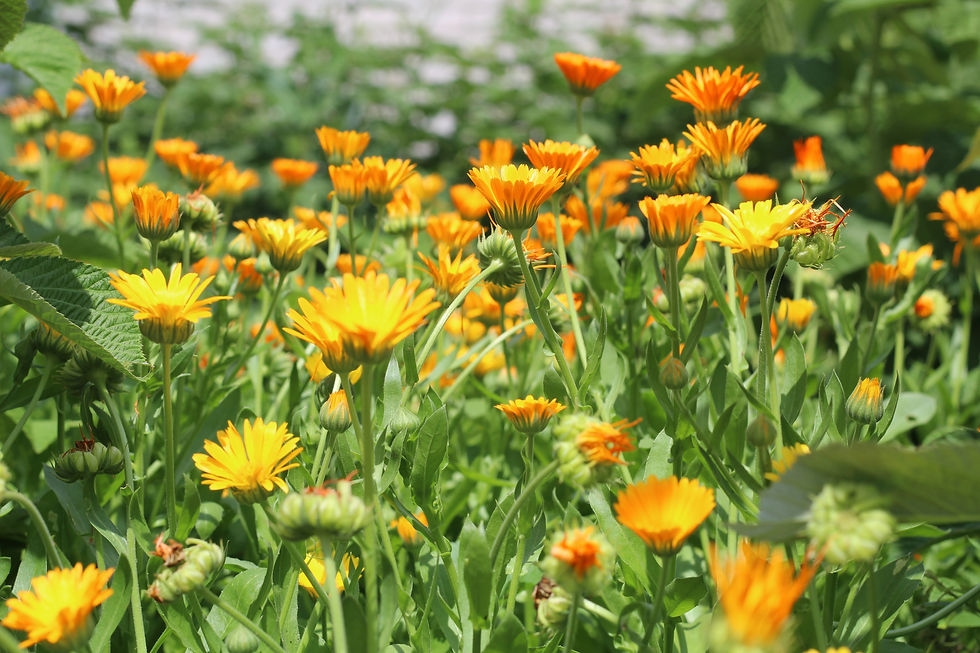
Calendula (Calendula officinalis)
My travel apothecary is not limited to teas and tinctures. Calendula is one of my absolute favorite skin herbs and she absolutely earns a spot in my suitcase.
Travel means different soaps, hotel toiletries, dry airplane air, miles of walking, and sometimes unexpected skin irritation. A small calendula based salve tucked into my bag has saved me more than once. Just remember that if you are carrying salves or tinctures onto the plane they need to be packed according to current TSA requirements.

Lavender (Lavandula angustifolia)
Lavender practically belongs in every suitcase I pack. I love her aromatically when I am overstimulated, tired, or trying to wind down after a very full travel day.
A tiny personal inhaler is my preferred way to travel with lavender because it allows me to enjoy the calming aromatherapy without filling someone else's airspace with it. Airports and airplanes are shared spaces and not everyone tolerates fragrance or essential oils well. A personal inhaler keeps the experience personal and considerate of the people around you.
Herbs are support, not a force field
I love herbs. I have devoted an enormous part of my life to studying them, working with them, and helping others incorporate them into their wellness. But I never want herbal medicine to give anyone a false sense of security.
No herb can guarantee that you will not pick up a respiratory virus while traveling. In crowded airports and airplanes some of the simplest tools remain incredibly valuable. Washing your hands frequently. Using hand sanitizer when washing is not available. Avoiding touching your face with unwashed hands. Considering a well fitting high quality mask in crowded spaces.
Herbs are part of the toolkit. They do not have to be the entire toolkit.
My simple herbal carry-on kit
Here is exactly what I am packing for Washington D.C.:
Ginger tea for digestion, warmth, and occasional nausea.
Peppermint tea for digestion and refreshing nervous system support.
Lemon balm for evening wind down and stress support.
Chamomile for bedtime ritual and digestive comfort.
Marshmallow root for dry and irritated tissues.
Elderberry preparation as a just in case respiratory support.
Echinacea tincture for short term herbal support.
Calendula salve for skin care and minor irritation.
Lavender personal inhaler for calming aromatherapy.
And depending on the trip I will probably also tuck in a pain support tea or topical because walking miles through a new city has a very particular way of reminding a hypermobile body that sightseeing is, in fact, exercise.
Traveling between two completely different climates
The climate change is honestly one of the biggest things on my mind with this trip. When your body has adapted to intense desert heat and dryness, stepping off a plane into a cooler and more humid environment can feel surprisingly dramatic.
Our skin notices. Our sinuses notice. Our joints notice. And our nervous systems absolutely notice.
Rather than expecting my body to simply keep up, I like to give it support while it acclimates. Warm ginger tea in the morning. Plenty of water throughout the day. Regular meals that do not push my MCAS too hard. Layers of clothing rather than letting myself get chilled. Rest when my body asks for it. Lemon balm or chamomile when it is time to wind down. And enough flexibility in the itinerary to remember that I do not have to see everything to have a wonderful trip.
The most important thing I pack
After all these herbs and teas and little remedies, there is one thing that matters even more than all of them.
Listening to my body.
Travel encourages us to override ourselves. Just one more museum. Just one more monument. Just one more restaurant. Just one more stop. But the body does not particularly care that we are on vacation. It still needs hydration. It still needs nourishment. It still needs sleep. It still needs moments of quiet.
And sometimes the most healing thing we can do while traveling is sit somewhere beautiful with a cup of tea and simply be where we are.
So yes, my suitcase heading to Washington D.C. is full of herbs. Because wherever I travel, bringing a little bit of my herbal apothecary with me helps make an unfamiliar place feel a little more like home.
Safe travels, friends. And do not forget your tea.
With love and a cup of tea in my to-go cup,

This blog is for educational purposes only. Herbal products can cause allergies, side effects, and medication interactions. If you take medications, are pregnant or breastfeeding, or have complex health concerns, please consult a qualified healthcare professional before adding new herbal products to your routine.



Comments