


Halloween Herbs: The Magical Botanical History Behind the Holiday We Love
As an herbalist, Halloween is honestly one of my favorite times of year. Not just for the costumes and the candy and the general spooky atmosphere, though I am absolutely here for all of that. But because Halloween and herbs have been deeply intertwined for centuries in ways most people have never thought about.
Long before plastic pumpkins and bags of candy, autumn was a season of gathering roots, preserving the last herbs from the garden, lighting fires against the growing darkness, and preparing the body and the home for winter. Plants were not simply food or medicine. They were woven into stories about protection, spirits, divination, death, remembrance, and the mysterious boundary between the visible and invisible worlds.
As someone who works with plants every single day and who believes deeply in the wisdom of the natural world, there is something about Halloween that feels profoundly herbal to me. So let us wander through the Halloween herbs and botanical folklore that shaped this holiday we all love.

Samhain and the end of the harvest
Many of Halloween's customs developed over centuries from a mixture of traditions, particularly the Gaelic festival of Samhain, later Christian observances surrounding All Saints' Day and All Souls' Day, and eventually the folk traditions that traveled with immigrants to North America.
Samhain, traditionally associated with the transition from October 31 into November 1, marked the beginning of the darker half of the year in the Gaelic seasonal calendar. The harvest was ending. Winter was approaching. Livestock were brought down from summer pastures, food was stored, fires were lit, and communities prepared for the difficult months ahead.
Over time Samhain also became strongly associated in folklore with the idea that boundaries between worlds were unusually permeable during this time. That makes Halloween's fascination with ghosts feel a little less random. The season itself represents a threshold. Summer has died back. Leaves fall. Plants retreat underground. Seeds become dormant. Darkness arrives earlier each evening.

Yet beneath the soil, life remains.
For an herbalist, there may be no better reminder of the cycle of life, death, rest, and rebirth than the autumn garden...
Halloween Herbs, Spices, and More

Rosemary: the herb of remembrance
Rosemary (Salvia rosmarinus) is one of the most beautiful Halloween herbs and one that carries such deep personal meaning for me.
She has a long association with remembrance, appearing historically at both weddings and funerals, symbolizing fidelity, memory, love, and honoring those who have died. That makes rosemary especially meaningful for this time of year when the veil between worlds is said to be at its thinnest.
Rather than thinking of Halloween exclusively as spooky entertainment, we can also use this season to remember the people who came before us. Place a sprig of rosemary beside photographs of loved ones, add it to an autumn wreath, or simply hold a little rosemary while recalling someone whose presence still matters to you.
And if you want to deepen that ritual even further, my Lift Your Heart Tea, which contains rose petals alongside other heart supporting herbs, makes a beautiful companion for those quieter, more reflective Halloween moments. A warm cup while you sit with your memories and your rosemary. Sometimes remembering is its own medicine.
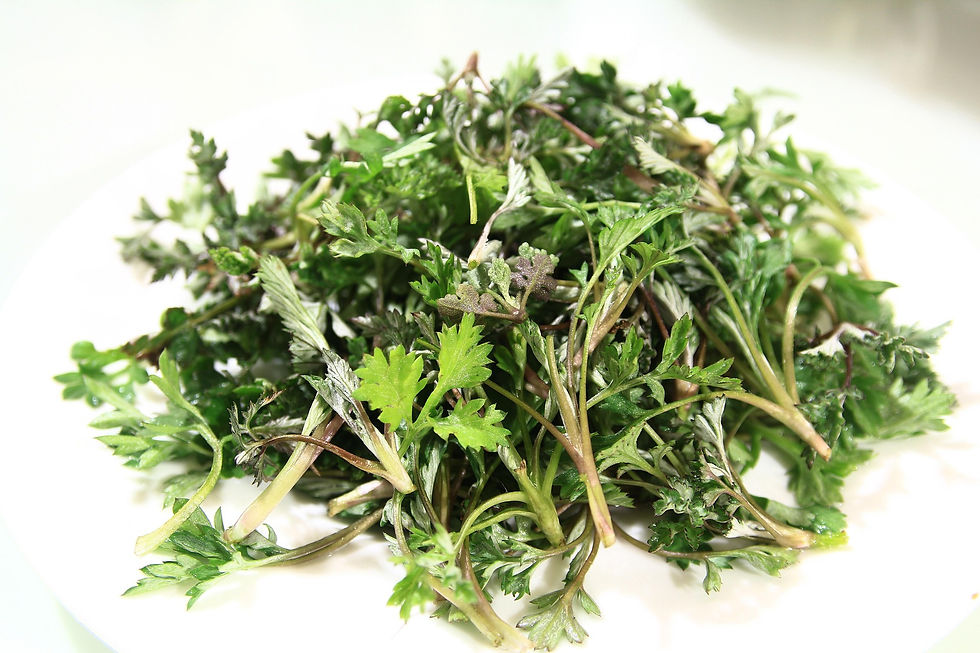
Mugwort: dreams, divination, and the mysterious
Few Halloween herbs look more at home in October folklore than mugwort (Artemisia vulgaris).
She has accumulated centuries of folklore involving dreams, protection, travel, divination, and magic. She belongs to the Artemisia genus, whose very name evokes Artemis, wilderness, moonlight, and the untamed. In contemporary magical and folk herbal traditions, mugwort is frequently tucked beneath pillows, included in dream sachets, burned as incense, or incorporated into rituals intended to encourage vivid dreams.
Now, I want to be honest with you about mugwort as an internal herb. She is not appropriate for everyone, particularly during pregnancy, and members of the Artemisia genus can cause reactions in sensitive individuals. So sometimes the folklore is best appreciated without drinking the potion.
If you are drawn to the dream and ritual energy of mugwort this Halloween season but want a gentler internal option, my Blue Lotus Dream Tea was crafted specifically for deep rest, dream enhancement, and that beautiful liminal space between waking and sleep. She captures that same mysterious Halloween energy in a cup that is safe and deeply nourishing.

Sage: cleansing the home
Various species of sage have long histories as medicinal, culinary, ceremonial, and symbolic plants across different cultures. European garden sage became associated with longevity, wisdom, protection, and household medicine. Its reputation was so great that an old saying essentially asked why should a person die while sage grows in the garden.
Around Halloween, sage can become part of a simple and beautiful seasonal tradition. Simmer sage with rosemary, apple peel, cinnamon, and cloves to fill your home with the scent of autumn. Hang bundles of culinary sage to dry. Add it to seasonal cooking.
And if you feel called to incorporate smoke cleansing into your Halloween ritual, my Wild Lavender Smudge Stick from the Magik Supplies collection is one of my favorites for clearing and creating intentional space in the home. Lavender brings its own gentle protective and calming energy to any seasonal ritual and she smells absolutely incredible this time of year.
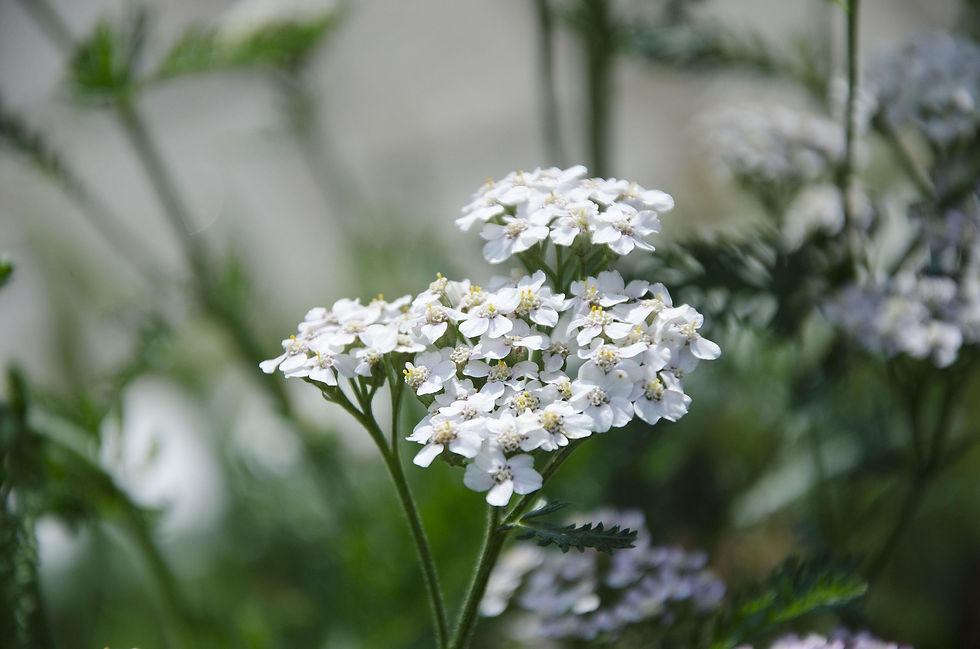
Yarrow: protection at the threshold
Yarrow (Achillea millefolium) has one of those histories that seems almost made for Halloween. Her botanical name connects her with Achilles and she has an ancient reputation as a wound herb. But her folklore stretches far beyond physical healing.
Across different European folk traditions, yarrow became associated with protection, courage, love, divination, and boundaries. And boundaries are exactly what Halloween is about. Doorways. Windows. Crossroads. Sunset. The transition from autumn toward winter. The imagined threshold between the living and the dead.
A dried bundle of yarrow hanging near the doorway makes a beautiful botanical Halloween decoration while acknowledging the plant's long association with protection at the threshold.

Apples: Halloween's forgotten magical fruit
We do not usually think of apples as Halloween herbs but perhaps we should.
Apples became deeply entangled with autumn divination customs, particularly those concerning romance and marriage. Young people once participated in apple games and divination practices supposedly capable of revealing something about a future sweetheart.
One particularly charming custom involved peeling an apple in one long strip and tossing the peel over the shoulder. The shape it formed was interpreted as the first initial of a future spouse.
Suddenly bobbing for apples seems considerably more interesting.

Hazelnuts, rowan, and hawthorn
Hazelnuts also appear in old Halloween divination traditions. In one custom, nuts representing potential lovers were placed near a fire. How they burned, cracked, jumped, or remained together could supposedly reveal the future of a relationship. Imagine an old hearth on a dark October night, friends gathered around the flames, watching hazelnuts pop and attempting to determine who would marry whom. Humans apparently have always enjoyed making their love lives unnecessarily complicated.
The rowan tree occupies an important place in Scottish and northern European folklore, its brilliant red berries and distinctive leaves becoming associated with protection against enchantment. It is a wonderful example of something we see repeatedly in plant folklore. Plants growing at the edges of human life, the doorway, hedgerow, or garden gate, often became guardians of symbolic thresholds as well.
And hawthorn, one of my most beloved herbs for her cardiovascular and emotional heart support, carries particularly rich Halloween folklore in Ireland and Britain. Hawthorn trees were sometimes associated with fairies and supernatural places, especially solitary trees growing in particular locations. She represents such a beautiful contradiction. Spectacular spring blossoms representing new life alongside thorns, twisted branches, and decidedly otherworldly folklore. Plants rarely fit neatly into categories of good or bad. Neither does nature.

The mandrake: Halloween's most infamous root
No Halloween herbs discussion would be complete without mandrake (Mandragora officinarum).
The humanlike appearance of its forked root helped generate extraordinary folklore. According to later European legends, a mandrake screamed when pulled from the earth and hearing the scream could kill the unfortunate person harvesting it. Elaborate methods were supposedly devised for safely removing one from the ground.
Mandrake became associated with magic, fertility, protection, love charms, and witchcraft, eventually earning a permanent place in Western occult imagery. Unlike many gentler herbs on this list however, mandrake is toxic. This is a plant whose history is much safer to explore through books and folklore than through any kind of experimentation.
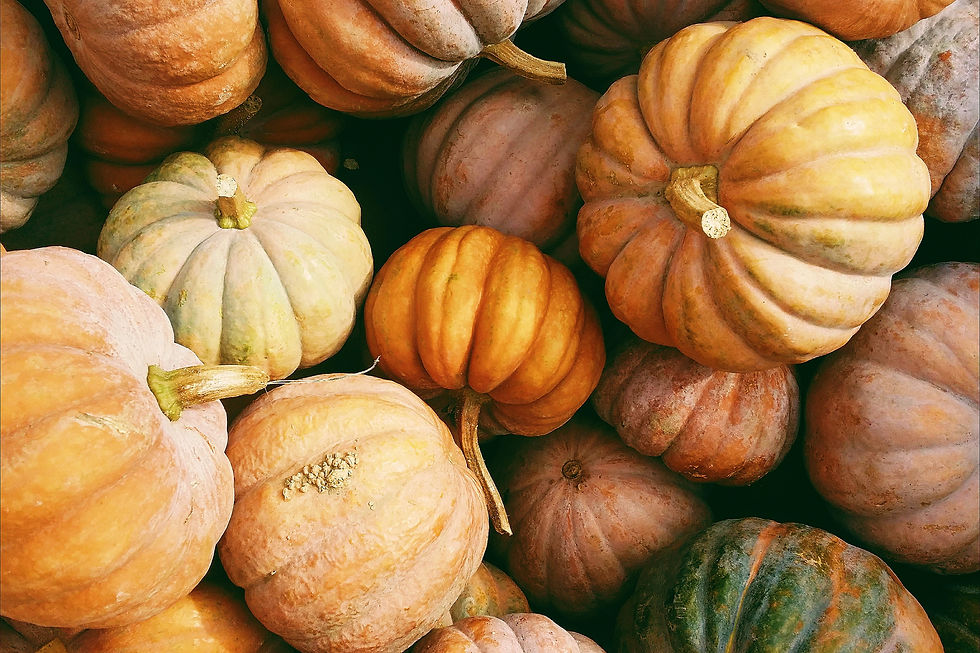
Pumpkins were not the original jack-o-lanterns
And then there is Halloween's most famous plant of all. The pumpkin.
Except the earliest jack-o-lanterns were not pumpkins. In Ireland and parts of Britain people carved turnips and other root vegetables into frightening faces. When Irish immigrants arrived in North America, pumpkins offered a much larger and considerably easier to carve alternative.
Thankfully. Anyone who has attempted to carve a turnip will understand immediately why the pumpkin won.
There is something beautifully appropriate about that transformation. A harvest food became a glowing guardian sitting at the threshold of the home. Very Halloween. Very herbal.
Create your own Halloween herbal tradition
Halloween and Halloween herbs belong together beautifully and you do not need anything elaborate to bring that into your own home this season.
Make an autumn simmer pot with apple, rosemary, cinnamon, and clove.
Hang dried yarrow or garden sage among your Halloween decorations.
Place rosemary beside photographs of ancestors or loved ones you want to honor.
Carve a pumpkin and save the seeds for roasting.
Use a smudge stick to clear and set intention in your space.
Brew a warm herbal tea while telling ghost stories by candlelight.

A cozy Halloween tea blend
For a dreamy Halloween evening, try this simple caffeine free blend:
Dreamy Halloween Tea
2 parts chamomile
1 part lemon balm
1 part rose petals
1/2 part lavender
A small pinch of cinnamon
Steep covered for about 10 minutes and strain. Add a little honey if desired.
No eye of newt required.
Perhaps the real magic of Halloween herbs is not found in anything supernatural.
Perhaps it is found in paying attention.
The trees are letting go. The herbs are setting seed. Roots are storing energy beneath the earth. The days are shortening, inviting us indoors toward warmth and rest.
For our ancestors this transition was not merely decorative. Winter demanded preparation. Plants provided food, medicine, fragrance, warmth, ritual, and reassurance. Stories gave meaning to the darkness gathering outside the door.
Today we celebrate Halloween with costumes, candy, horror movies, and glowing pumpkins. But underneath it all remains something ancient. A fascination with darkness. A respect for thresholds. A desire to remember those who came before us. And the quiet knowledge that nature is moving into a period of rest.

So this Halloween,
light your jack-o-lantern.
Brew something warm.
Put rosemary on the table.
Tell an old story.
Remember someone you love.
Tend to your own little piece of the natural world.
And listen to the plants. They have been part of Halloween's story all along.
Happy Halloween from Desert Bloom Wellness Therapies!! 🎃🌿
With love and a cup of tea in hand,

The Desert Bloom newsletter is where I share the things that do not always make it to the blog. Subscribe and let's keep this conversation going. Plus you'll receive a "Build Your Home Herbal Apothecary Guide" as my gift to you for joining our community.
This blog is for educational purposes only. Some plants mentioned in this post, including mugwort and mandrake, are not appropriate for everyone and should not be consumed without guidance from a qualified practitioner. Always research individual plants before internal use.


Comments