


The 6 Best Herbs to Relieve Allergy Symptoms
Here where I live in the desert, I notice the shift between seasons in a very specific way. The palo verde begins to bloom, grasses release their quiet clouds into the air, and almost instantly, the body responds. It’s something many of us feel before we even see it.
But no matter where you live, you may recognize your own version of this seasonal transition. The tickle in the throat, watery eyes, the fatigue that settles into the body… seasonal allergies are not just a nuisance, they are a full-body experience.
From a holistic perspective, allergies are often a sign that the immune system is overreacting, responding to harmless environmental triggers as if they are threats. I've gathered the 6 Best Herbs to Relieve Allergy Symptoms and their methods so you can breathe through this season. The goal of herbal support is not to suppress the body, but to regulate, soothe, and strengthen so it can respond with more ease and resilience.

Understanding Seasonal Allergies
Seasonal allergies (allergic rhinitis) are triggered by things like:
Pollen (trees, grasses, weeds)
Dust and environmental irritants
Mold spores
Common symptoms include:
Sneezing and congestion
Itchy, watery eyes
Post-nasal drip
Fatigue and brain fog
Herbal support focuses on:
Modulating the immune response
Reducing inflammation
Drying or soothing excess mucus
Supporting detox pathways (liver + lymph)
Best Herbs to Relieve Allergy Symptoms

Nettle (Urtica dioica)
A staple in allergy care, and for good reason.
Natural antihistamine effects
Reduces inflammation
Nourishes with minerals (especially helpful during seasonal depletion)
Energetics: Cooling, drying
Best for: Sneezing, itching, inflammation

Chamomile (Matricaria chamomilla)
Gentle, soothing, and deeply supportive for irritated tissues.
Calms histamine response
Soothes mucous membranes
Supports relaxation (helpful when allergies disrupt sleep)
Energetics: Cooling, slightly moistening
Best for: Irritated sinuses, watery eyes, restlessness

Elderflower (Sambucus nigra)
A traditional ally for upper respiratory support.
Opens sinuses and promotes gentle sweating
Helps move stuck congestion
Anti-inflammatory and antiviral
Energetics: Cooling, drying
Best for: Congestion, sinus pressure

Peppermint (Mentha piperita)
A refreshing herb that clears and opens.
Decongestant
Antimicrobial
Supports clearer breathing
Energetics: Cooling, drying
Best for: Sinus congestion, brain fog
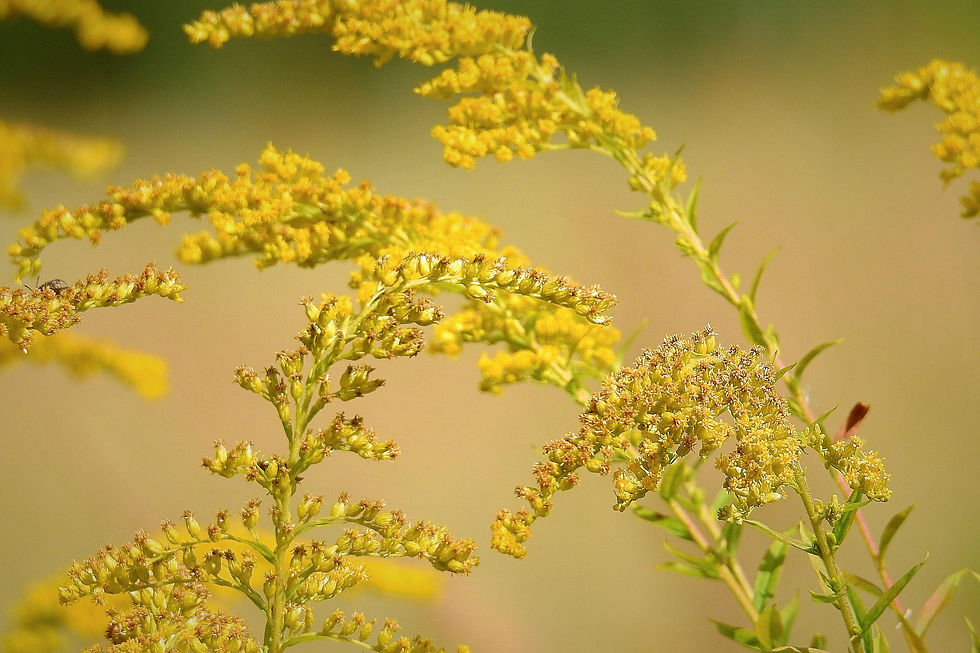
Goldenrod (Solidago spp.)
Often misunderstood, this is not the cause of allergies, but a remedy.
Supports kidney + urinary system (helps drain excess fluid)
Reduces sinus inflammation
Excellent for post-nasal drip
Energetics: Warming, drying
Best for: Drippy, stagnant congestion

Eyebright (Euphrasia officinalis)
A specific herb for the eyes and sinuses.
Reduces eye irritation and redness
Helps dry excess mucus
Energetics: Cooling, drying
Best for: Itchy, watery eyes
Routes & Modes of Herbal Use
One of the most beautiful things about herbal medicine is that it meets you in many forms. Choosing the right route can make all the difference.
Teas & Infusions
Best for: Daily support, gentle regulation
Use 1–2 tablespoons of dried herbs per cup of hot water
Steep 10–15 minutes (longer for deeper infusions like nettle)
Drink 2–4 cups daily during peak allergy season
Pro tip: Combine nettle, chamomile, and peppermint for a nourishing daily blend.
Tinctures
Best for: Convenience + potency
Typically 1–2 dropperfuls, 2–3x daily
Faster acting than teas
Easy to combine multiple herbs
Ideal for busy days or acute flare-ups.
Steam Inhalation
Best for: Immediate sinus relief
Add herbs like peppermint or chamomile to a bowl of hot water
Cover head with a towel and inhale deeply
Opens sinuses, reduces pressure, and brings quick relief.
Nasal Rinses (Neti Pot / Saline)
Best for: Clearing allergens from nasal passages
Use sterile saline solution
Can be combined with herbal infusions (like chamomile) once cooled and properly strained
Especially helpful after being outdoors.
Herbal Eye Wash (Eyebright)
Best for: Itchy, irritated eyes
Prepare a very well-strained, cooled infusion
Use with a sterile eye cup
Always ensure cleanliness and proper straining.
Capsules / Powders
Best for: Long-term internal support
Cooling essential oils (like peppermint, well diluted)
Pain Ease Gel can be supportive for tension around the neck, jaw, and sinus-related headaches.

Best Practices for Managing Seasonal Allergies
Start Early
Begin herbal support 2–4 weeks before allergy season peaks to build resilience.
Hydrate Deeply
Fluids help thin mucus and support detox pathways.
Reduce Allergen Load
Shower after being outside
Change clothes after high pollen exposure
Use air purifiers when possible
Support the Gut
A balanced gut = a balanced immune system
Include:
Bitter herbs
Fermented foods
Fiber-rich plants
Breathe & Rest
Allergies can exhaust the nervous system.
Incorporate gentle yoga or Yoga Nidra
Support rest to allow the body to recalibrate
Listen to Your Body
Some days will require more rest, fewer exposures, or a shift in plans. There is wisdom in honoring that.
Remember Your Natural Rhythm
Seasonal allergies are not just something to “get through.” They are an invitation to tend to the body with softness and intention. Through herbs, rituals, and mindful care, we can transform this season from one of irritation into one of deeper connection.
At Desert Bloom Wellness Therapies, we believe that healing is not about forcing the body into submission, but about supporting it in remembering its natural rhythm.
May you breathe easier, move gently, and feel supported through every seasonal shift.


Comments