


✨ A Cozy History of Christmas Teas & Their Beloved Herbs (BONUS: Tea Recipe)
As the days shorten and winter draws us inward, few rituals feel as comforting as cupping a warm mug of fragrant tea. Christmas teas—rich with spice, citrus, and warming herbs—have a surprisingly long and magical history. These blends trace back through centuries of winter solstice ceremonies, medieval feasts, and herbal traditions designed to bring warmth, joy, and vitality during the darkest time of year.
Let’s settle in and explore how these seasonal brews came to symbolize comfort, celebration, and connection.

Ancient Roots: Winter Solstice & Spiced Brews
Long before Christmas as we know it, ancient cultures marked the Winter Solstice with feasting, fire, and warming drinks. Herbs and spices played a central role in these rituals:
Cinnamon, clove, and nutmeg were treasured imports, considered powerful protectors against winter illness.
Juniper, pine, and evergreen branches symbolized life amid the cold and were sometimes infused into early tonics or brews.
Honeyed herbal wines and mulled beverages were shared to bring warmth to the community.
While tea itself wasn't yet part of the European winter tradition, the concept of a spiced, uplifting seasonal brew began here.
Medieval Christmas: Spices as Luxury
By the Middle Ages, trade routes carried cinnamon, cardamom, ginger, and clove into Europe—and these ingredients became synonymous with celebration.
During the 12 days of Christmas, wealthy families crafted wassail bowls, mulled wines, and early spiced “teas” using herbs like:
Rosemary for remembrance and protection
Bay leaf for blessings
Peppercorns for digestive warmth
Ginger for vitality
Citrus peel for brightness in the dark of winter
Herbs were viewed not just as flavorings but as energetic protectors against seasonal cold, melancholy, and stagnation.
The Rise of True “Christmas Tea”
By the 1600s and 1700s, tea drinking became increasingly popular across Europe. Holiday blends emerged as a way to combine the luxury of tea with the festive warmth of spice.
Victorian households especially adored Christmas herbs, blending:
Black tea for grounding, daily comfort
Orange peel for a bright, sunny note
Clove & cinnamon for warmth
Cardamom for digestive ease after large meals
Vanilla or almond for sweetness and nostalgia
These blends were offered to guests, brewed on cold evenings, and gifted in beautiful tins—much like today.

Why These Herbs for Christmas? Energetic & Healing Traditions
Christmas herbs have always reflected both the needs of winter and the emotional meaning of the season:
Cinnamon: Warming, uplifting, promotes circulation
Clove: Protective, aromatic, digestive
Orange Peel: Brightens mood, gently invigorates
Ginger: Deep winter warmth, helps digestion after heavy meals
Cardamom: Heart-opening, aromatic, soothing
Rosemary: Clarity & remembrance (a classic winter herb)
Star Anise: Adds sweetness and magic, supports the lungs
Each herb carries centuries of symbolism—protection, cheer, abundance, grounding, and celebration.
Traditional Christmas Tea Recipe
A classic, warming blend inspired by Victorian-era holiday teas.
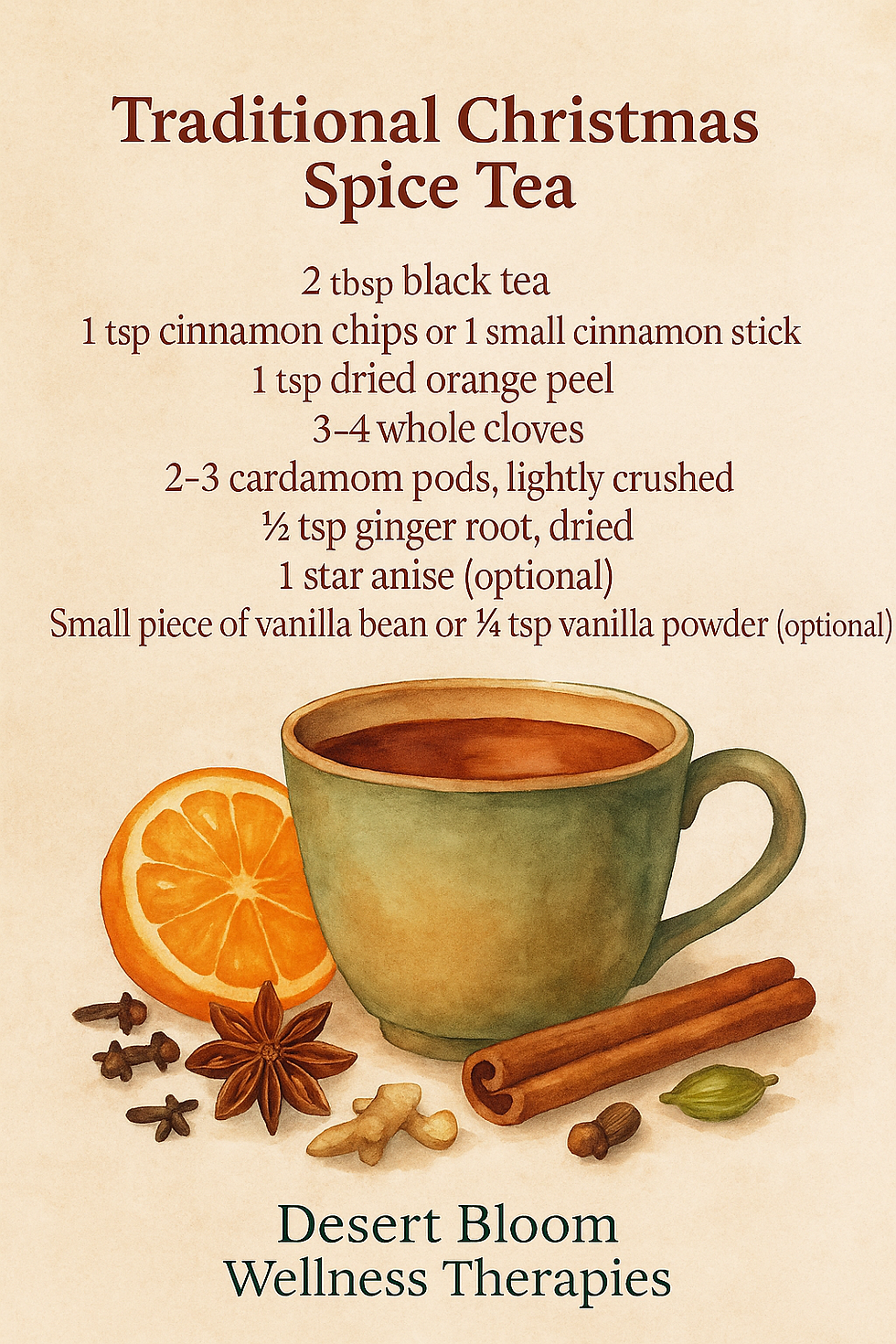
Traditional Christmas Spice Tea
Makes: 4–5 cups tea
Flavors: Warm, citrusy, spiced, comforting
Ingredients
2 tbsp black tea (Assam or Ceylon work beautifully)
1 tsp cinnamon chips or 1 small cinnamon stick
1 tsp dried orange peel
3–4 whole cloves
2–3 cardamom pods, lightly crushed
½ tsp ginger root, dried
1 star anise (optional, for sweetness + holiday magic)
Small piece of vanilla bean or ¼ tsp vanilla powder (optional but lovely)
Instructions
Combine all herbs and tea in a teapot or heatproof jar.
Bring 4–5 cups of water just to a boil.
Pour water over the blend and cover.
Steep 5–7 minutes for a rich flavor.
Strain and serve with:
A slice of orange
A touch of honey
Or a splash of milk for a creamier holiday treat
Tip:
Make a large batch of the dry blend, place it in jars, and gift it as a beautiful homemade Christmas present.
In Every Cup: A Lineage of Celebration
From ancient solstice gatherings to Victorian drawing rooms and modern kitchen tables, Christmas teas carry a lineage of warmth, resilience, and togetherness. These herbs remind us to slow down, savor the moment, and share simple comforts with loved ones.
With Warmth and Love,


Comments